



Raised by his father, and then trying to escape him.
The myth of the King of Pop began with one toxic father.
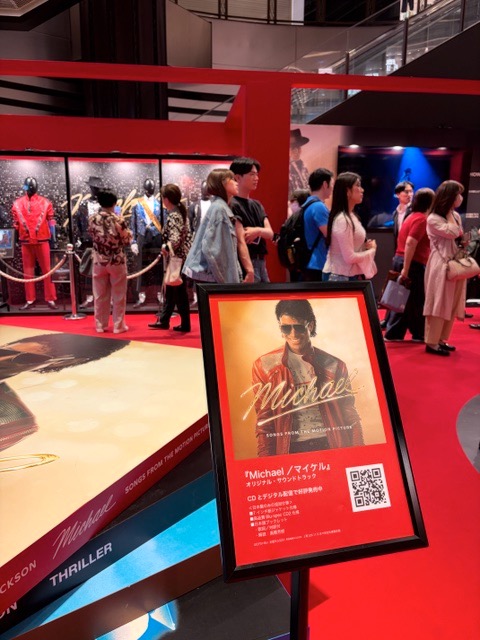
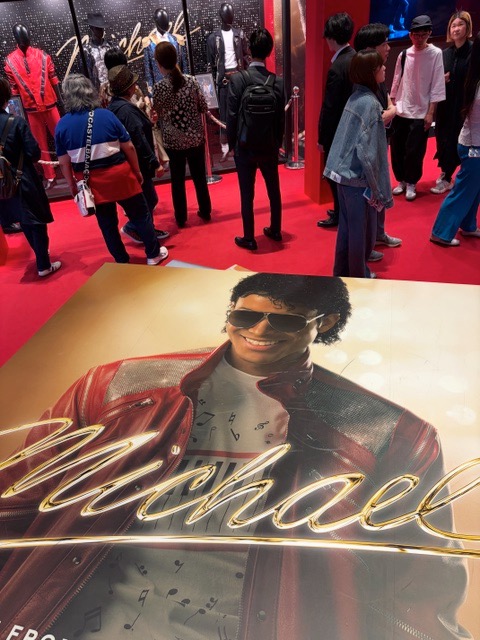
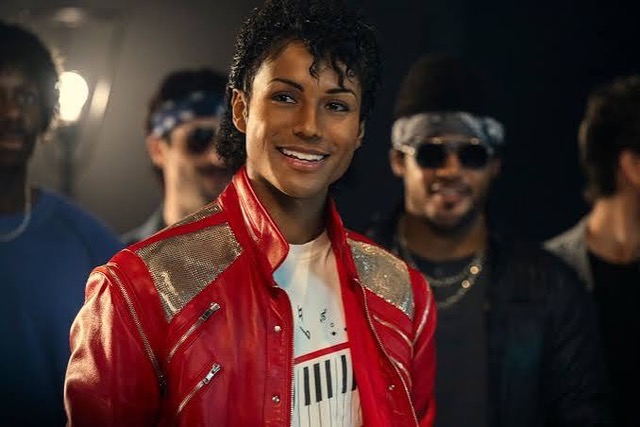
I went to see Michael, the biographical film about Michael Jackson. The lead role is played by his real-life nephew, Jaafar Jackson. Some people say they could have simply used archival footage of Michael himself, but this was a completely different kind of experience. At first, I thought, “Hmm, he doesn’t really look like him.” But as the story went on, he gradually became Michael. His extraordinary physicality, the sharply refined movements of his body, and the sheer beauty of his life force were overwhelming. I’m sure I wasn’t the only one who went home and immediately rewatched This Is It.
The central pillar of this film is Michael’s struggle to break free from his toxic father, Joe Jackson. Joe was an ambitious father who, while working at a steel mill, gave his sons intense training and led them to debut as The Jackson 5. There is no denying that his sharp eye helped bring Michael into the world. But even after his son’s success, he continued to act like the father in charge, trying to control him. I was honestly surprised by the force of Colman Domingo’s performance as Joe, portraying a father who treats his child as a possession. It is remarkable that the family approved such a depiction. That is how unsparing it is.
There are, however, some aspects that made me pause. Isn’t it a little too simple to reduce the life of such an extraordinary superstar to a single axis: conflict with his father? Michael’s complexity, loneliness, and the source of his creativity cannot be fully explained by the father-son relationship alone. Still, this film focuses only on the first half of his life. If a sequel is planned, there is a chance that this simplification will be overturned later.
Seen through the lens of Oyako Day, this film deals directly with a universal yet deeply difficult theme: the parent who discovers a child’s talent, and the child who seeks independence. Where is the line between recognizing talent and controlling it? Where does love end and possessiveness begin? Fuqua’s direction does not turn Joe into a simple villain, but tries to portray him as a human being. The film offers no easy answer. Instead, it asks each viewer to reflect on where that line lies within their own family.
With the energy of its live scenes, the persuasive power of its dance sequences, and above all the feeling that you are encountering Michael for the first time all over again, this is a cinematic experience worth having. Watch it as a father-and-son story, or as a testimony to pop culture history. Either way, it is a film to be experienced in a theater, surrounded by sound.
Film Information
Michael
2026
Directed by Antoine Fuqua / Produced by Graham King / Distributed by Toho-Towa
| Genre | Biographical Film / Music Drama |
|---|---|
| Themes | Talent and Control, Parent-Child Independence, Light and Shadow of Family |
| Parent-Child Connection | ★★★★★ |
| Music Factor | ★★★★★ |
| Immersion | ★★★★★ |
| Recommended For | Fans of Michael Jackson’s music, anyone interested in parent-child relationships and the nurturing of talent, and those who want to experience the live scenes through theater sound. |
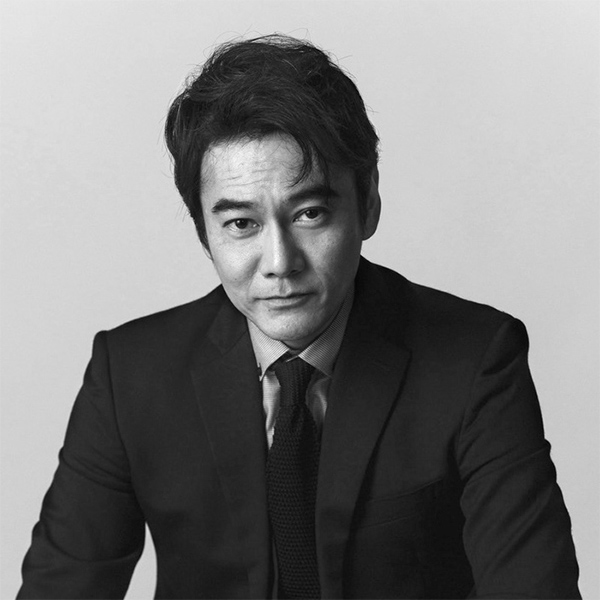
Satoru Seki’s Comment
Believing in a child’s talent and controlling that child’s life are two entirely different things. This film quietly asks when the step a parent takes “for the child’s sake” crosses a line.